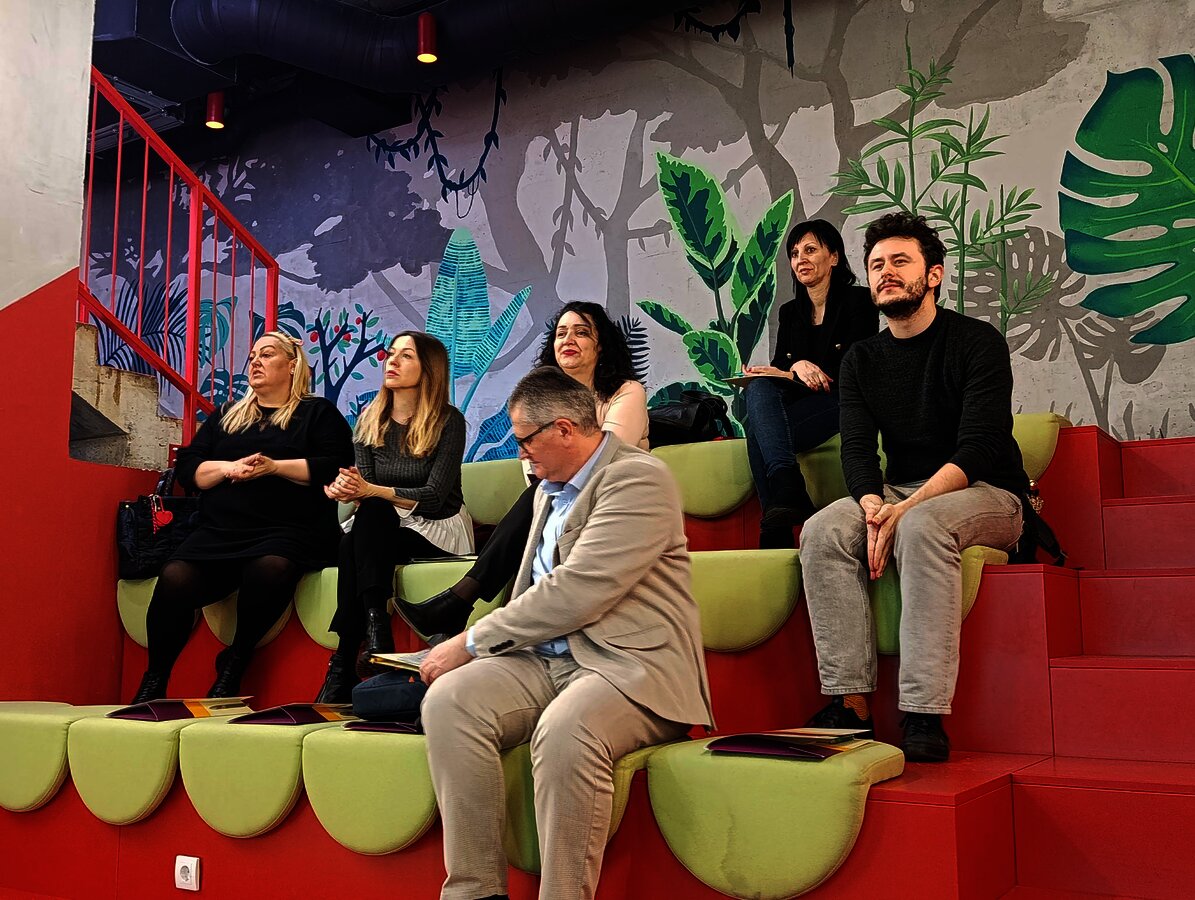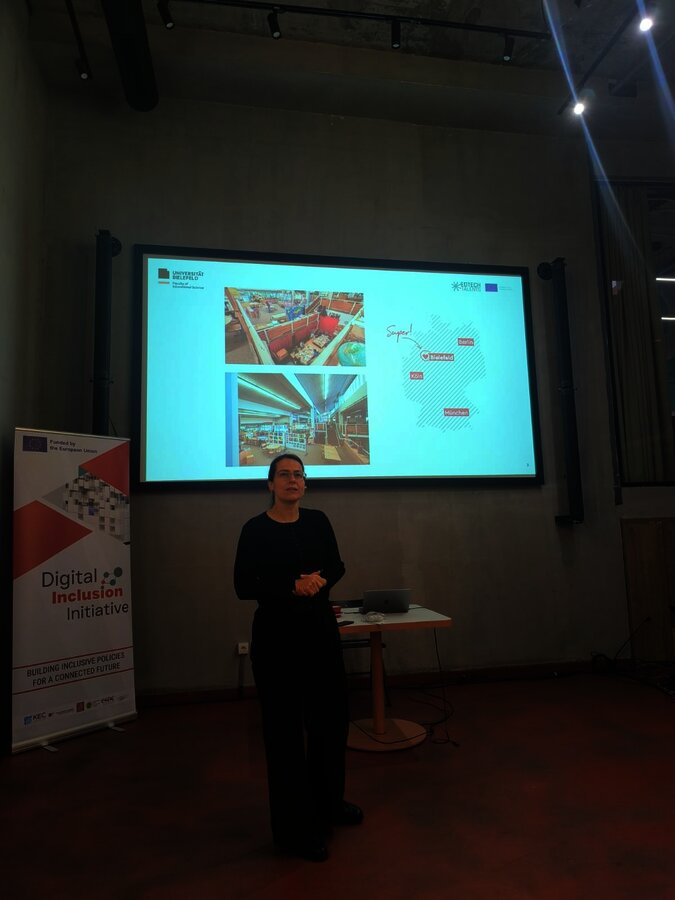

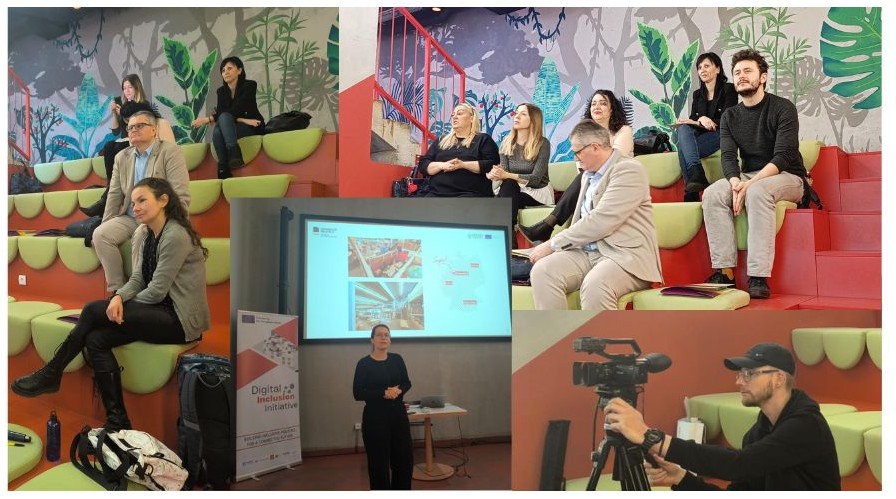
Members of the National Platform had the opportunity to hear a presentation by Prof. Cristina Popescu, an expert in the EdTech Talents Horizon project. Prof. Popescu is a lecturer and researcher at the Faculty of Educational Science at Bielefeld University in Germany, a research associate at the Institute for Advanced Study in the Social Sciences in Paris, and a consultant to the European Agency for Special Needs and Inclusive Education.
This event is a continuation of the work of the National Platform, following its first meeting held in November last year, when priorities and directions for action were defined. The February gathering provided an opportunity to further deepen these directions through the exchange of knowledge and international experiences.
The lecture was divided into two thematic parts. The first part presented international perspectives and innovations in the use of digital technologies in education in the context of inclusion, while the second part focused on concrete solutions and examples of good practice that have proven effective in different education systems. After each thematic segment, participants had the opportunity to ask questions and engage in discussion.
Members of the National Platform emphasized that full inclusion is a goal pursued by all sectors, but that a long path still lies ahead in developing the capacities of all stakeholders in order to achieve it. The digital practices and tools presented during the lecture were highlighted as particularly valuable, alongside the need for continuous cooperation and knowledge exchange to advance inclusive education.
The Digital Inclusion Initiative project addresses a critical aspect of modern participatory democracy—ensuring equal access to digital tools and information, which is essential for informed citizen participation and engagement in democratic processes, and also deals with an important aspect of the EU integration process.